

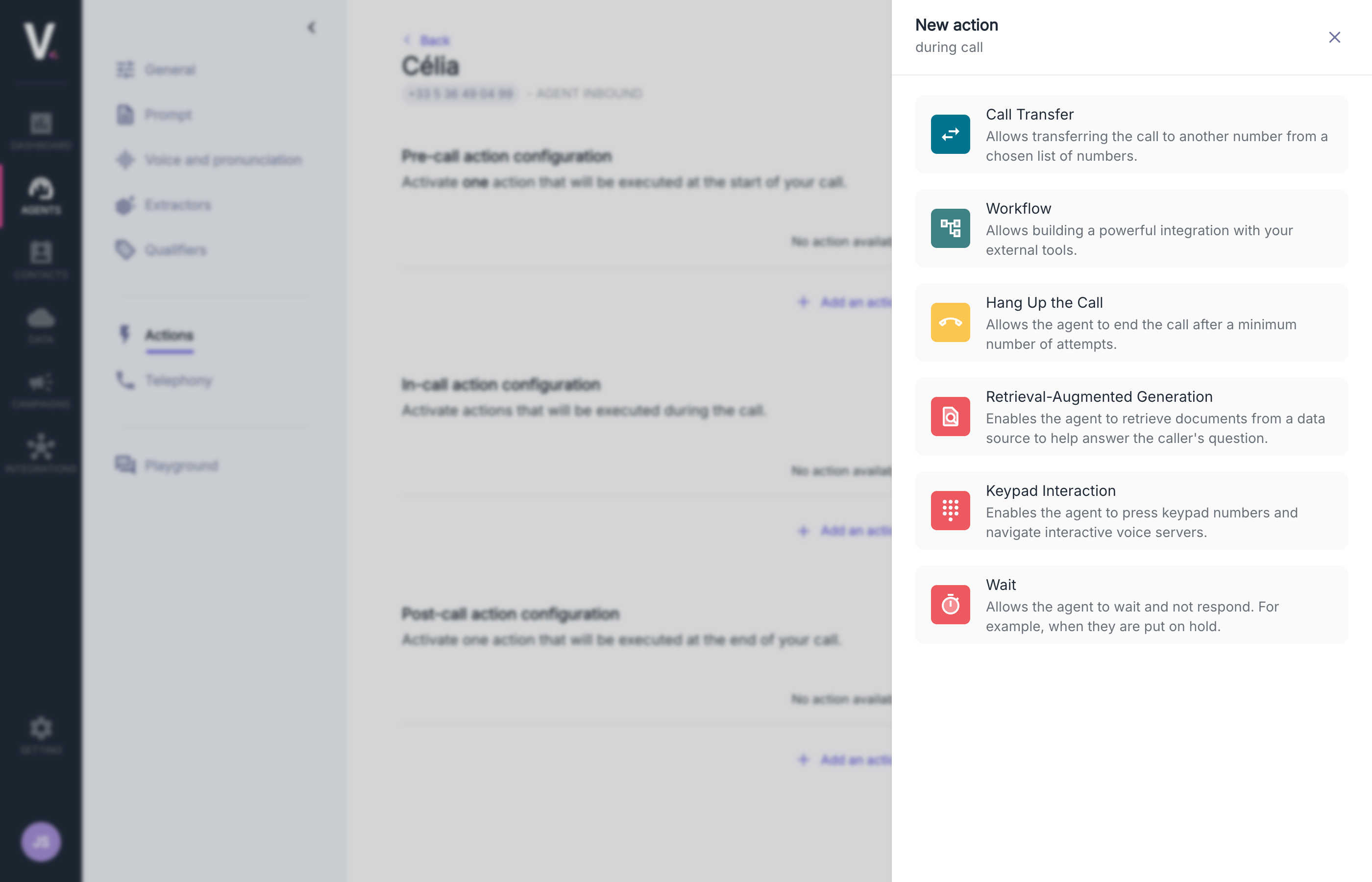
Call Transfer
The transfer action allows for the intelligent redirection of a call to another agent or an external number. This strategic feature can be configured to execute at different moments during the interaction.Use Cases
- Transfer to a specialized agent when a particular request is identified
- Redirect to an external service outside of business hours
- Automatic escalation to technical support for complex issues
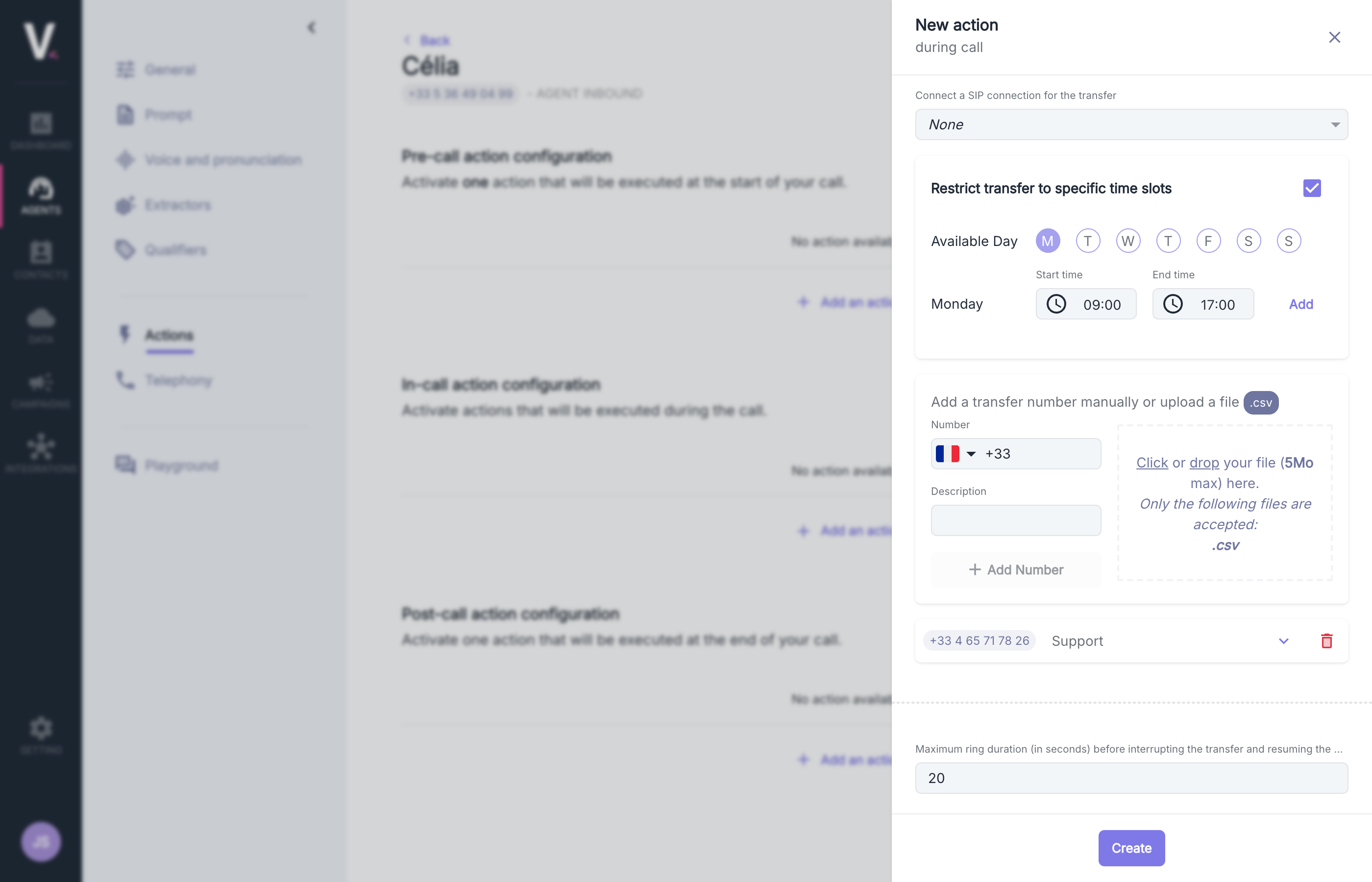
Call Transfer Action Parameters
SIP Connection
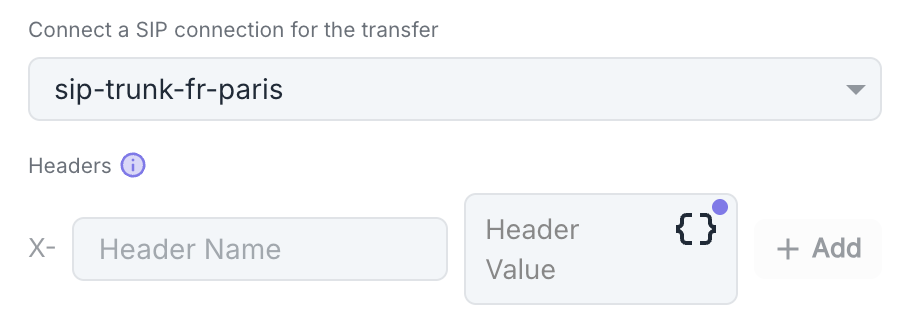
- Click on Add to add a new header.
- For each header, specify:
- Header name: Name of the SIP header.
- Header Value: Value associated with this header.
Transfer Timing Restrictions
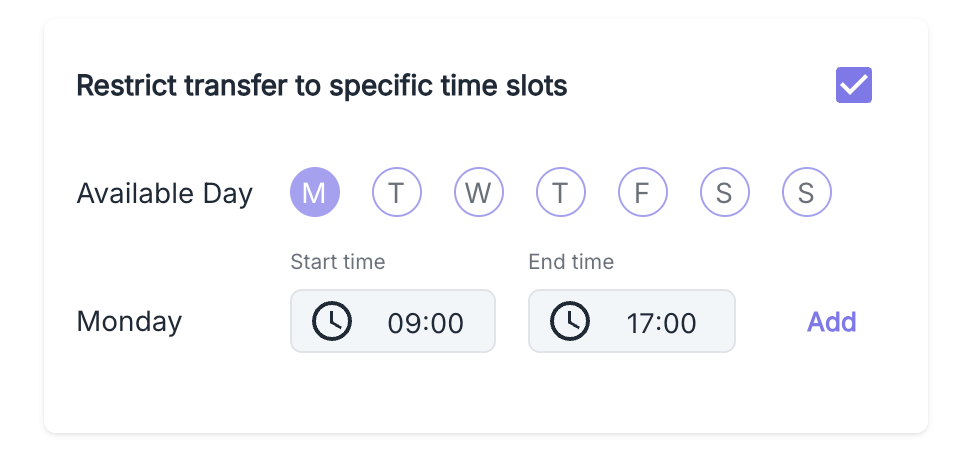
- Enable the option Restrict transfer to time slots
- Select eligible days (Monday, Tuesday, Wednesday, Thursday, Friday, Saturday, Sunday)
- Define the availability hours (e.g., 09:00 - 17:00)
- Click on Add to validate this time slot.
Adding Transfer Numbers
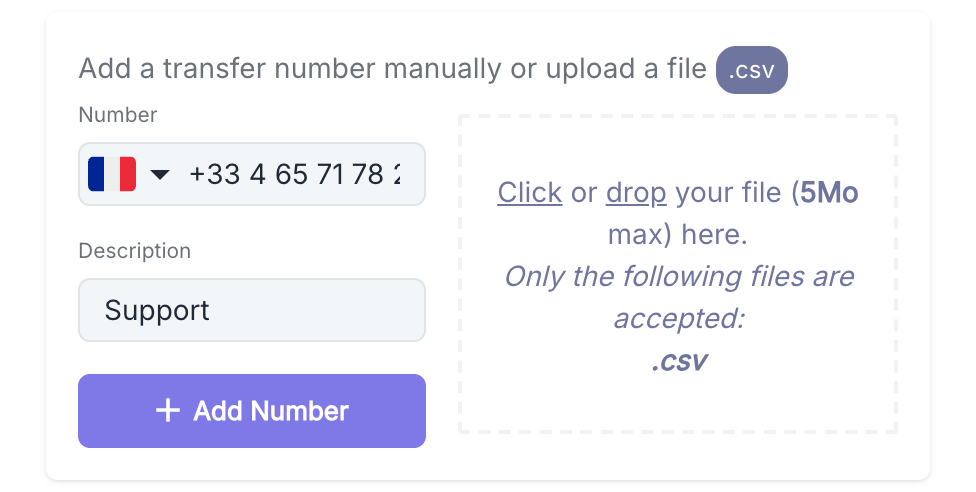
Manual Addition
- Select the country from the dropdown menu (country code)
- Enter the phone number
- Add a description to identify this number (e.g., “Technical Support”)
Import
Allowed File
File Format
Maximum Ring Duration
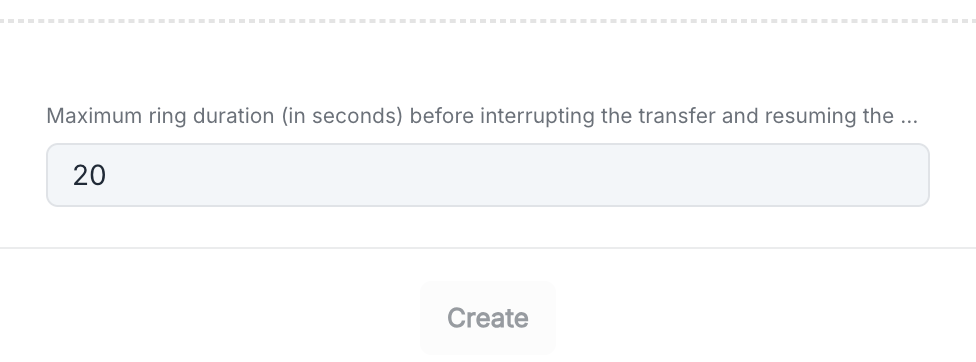
20 seconds (Min 5s, Max 120s).
Workflow
This feature allows for the development of sophisticated integrations with your external systems during the course of your communications. As with pre-call actions, the workflow must end with a Respond to the agent step to return the result to the agent during the call.Configure Workflows During the Call
See how to configure workflows
Hang Up
The hang-up action allows for controlled termination of a communication under specifically defined conditions. This feature can be implemented at different stages of the interaction.A default hang-up mechanism (not visible in this interface) is already integrated to avoid interaction loops while maintaining user experience quality. There is already a default hang-up action (not visible here) so that my agent does not loop while not hanging up on the user.
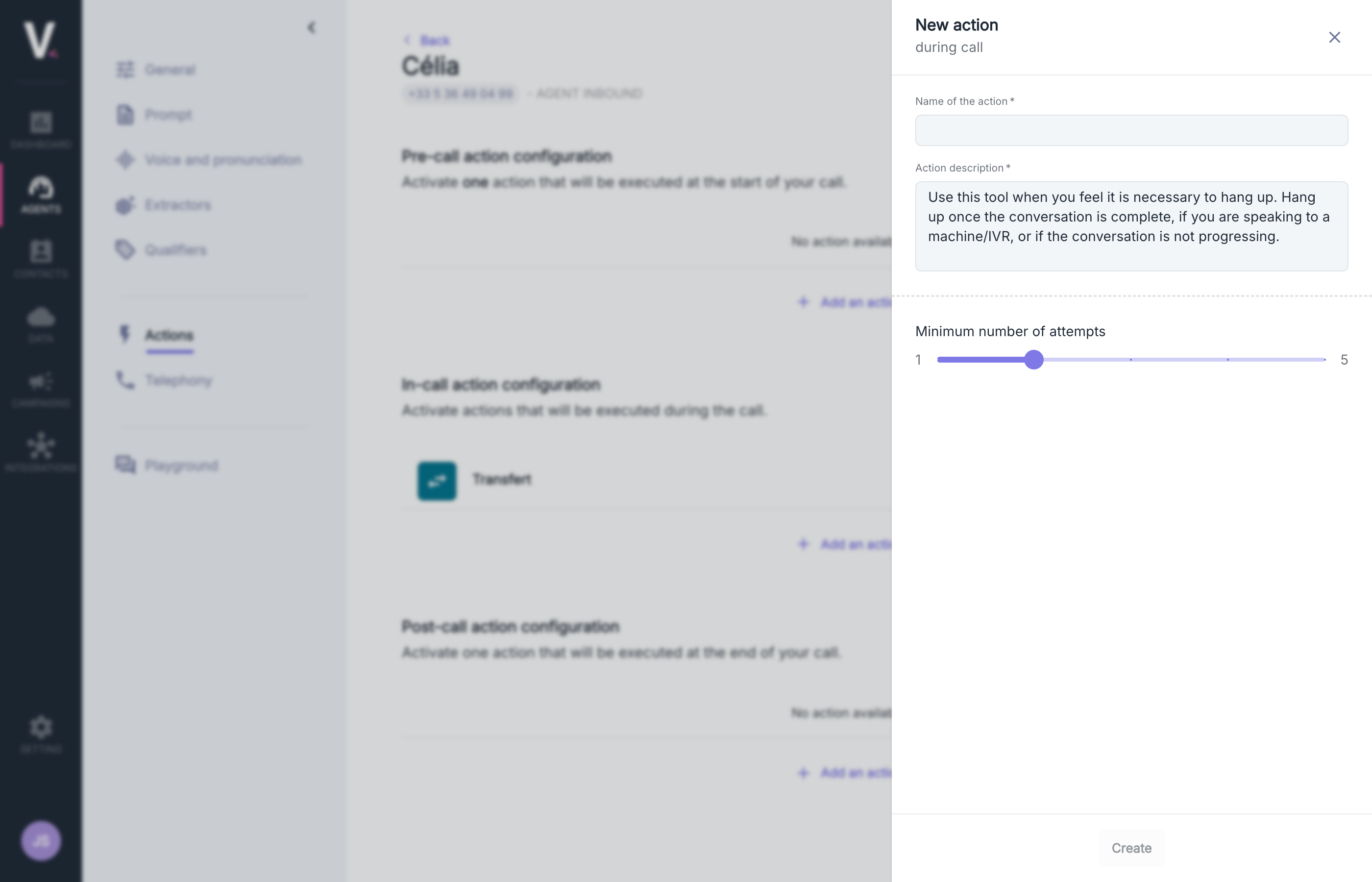
Use Cases
The hang-up action is particularly relevant in the following scenarios:- When all conversation objectives have been achieved
- Upon detecting interaction with an automated system (machine/IVR)
- When the conversation reaches a stalemate without progression
Configuration Parameters
Configuring a hang-up action requires defining the following parameters:Description
Specify in natural language the precise conditions under which the agent should terminate the communication.Attempt Configuration
The configuration control allows you to adjust the minimum number of attempts before triggering (Min 1, Max 5).RAG
The integration of RAG (Retrieval Augmented Generation) data sources allows you to enrich your agent with specific knowledge to deliver contextualized and precise responses.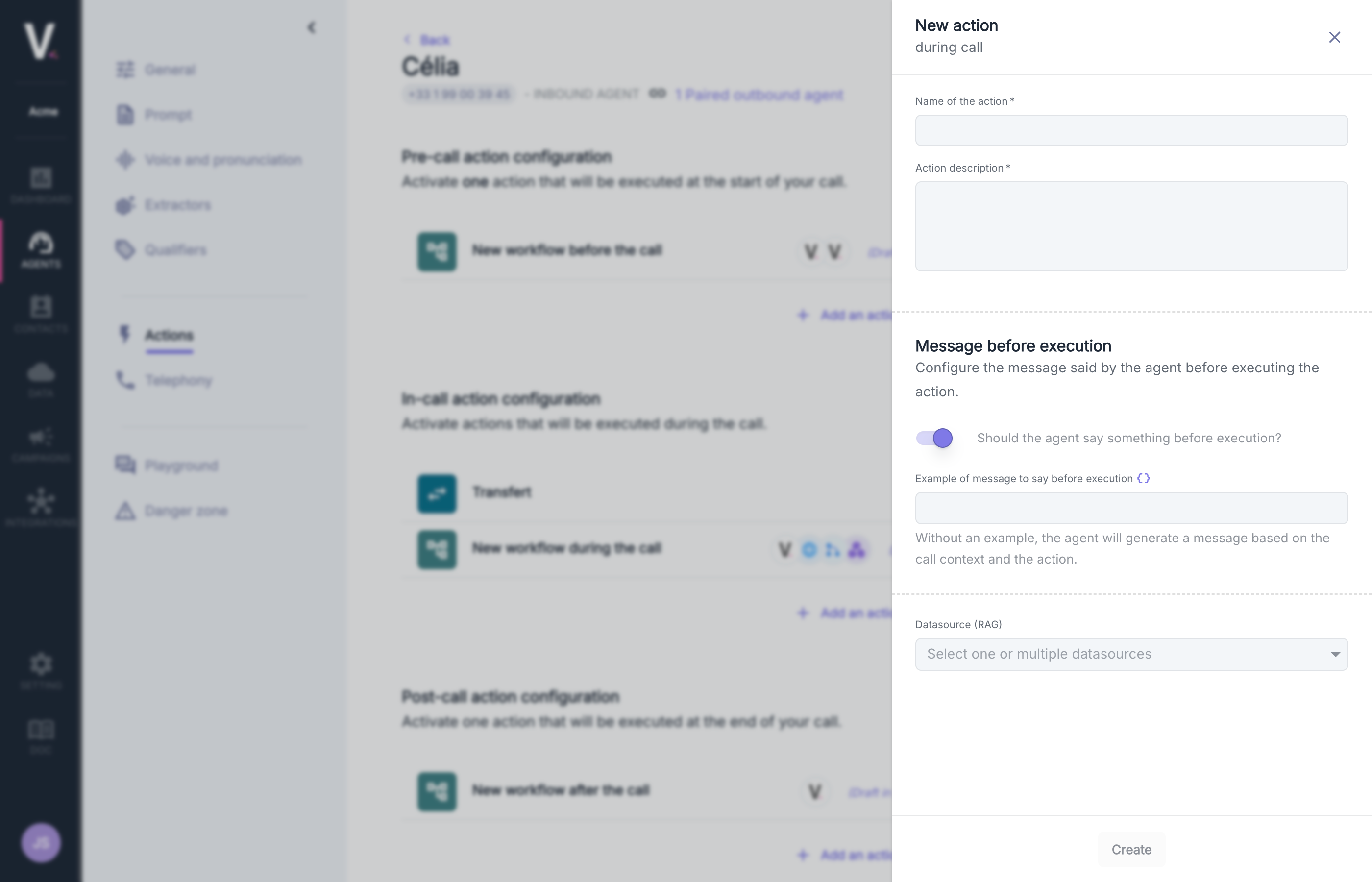
Required Fields
Description
Specify in natural language the exact circumstances under which the agent should activate this functionality.Message before execution
Enable or disable the message that the agent will say before executing the RAG action. You can add an example phrase to be spoken if the option is enabled.Data Source (RAG)
The dropdown menu allows you to select from the data sources configured in your environment.RAG
Configure your first RAG database
Keyboard Interaction
This feature allows the agent to emit tones by simulating key presses on a telephone keypad, thus facilitating interaction with interactive voice response systems .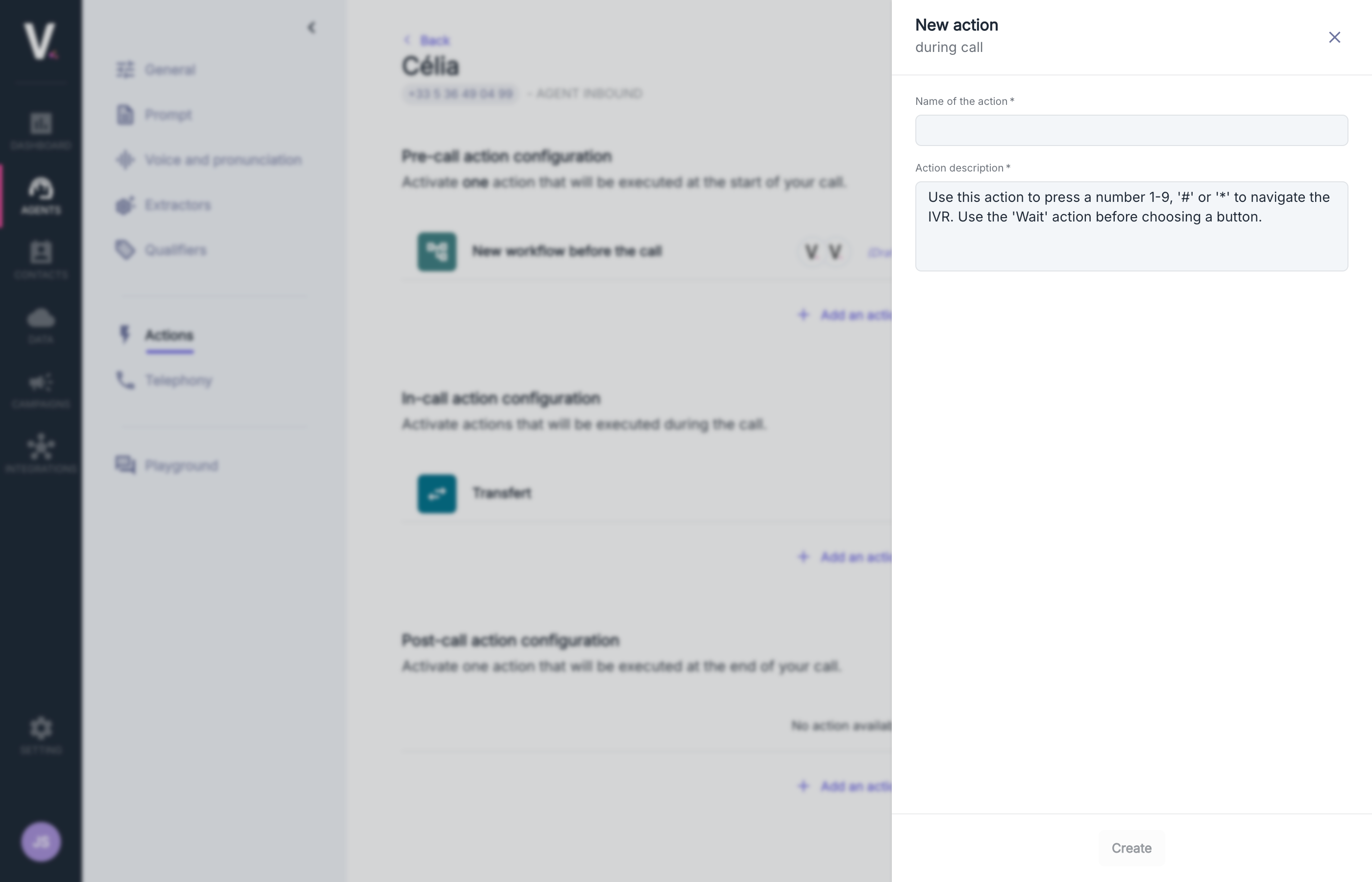
Required Fields
Description
In most implementations, the default description proves adequate, but you can enrich or customize it using natural language suited to your operational context.Wait
This feature allows the agent to temporarily suspend its responses, which is essential during holds (welcome music) or to detect IVR systems and wait for the complete announcement of menu options.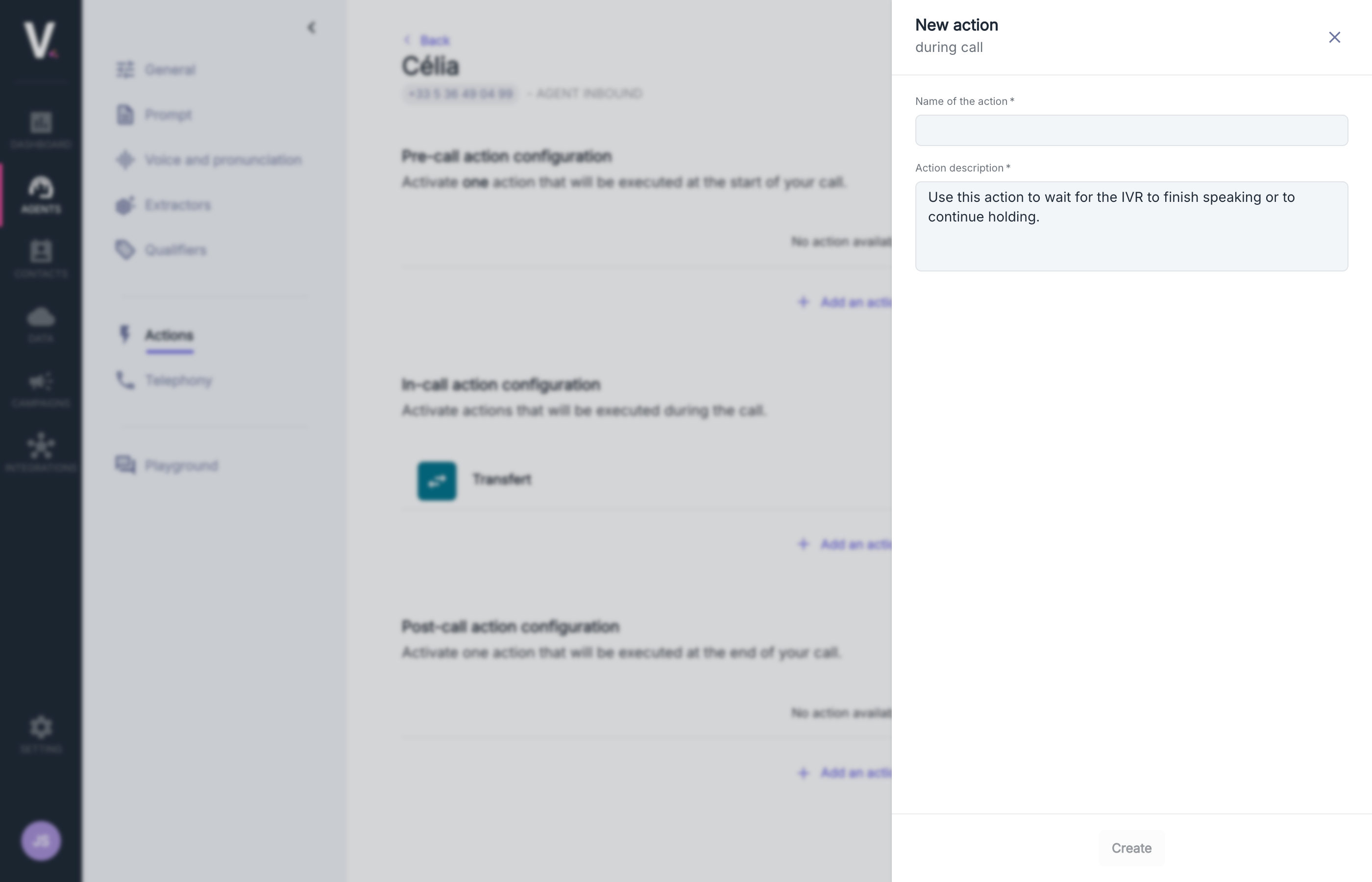
Required Fields
Description
In most implementations, the default description proves adequate, but you can enrich or customize it using natural language suited to your operational context.The following actions do not work on the chat channel and are ignored during a chat conversation: Call Transfer, Hang Up, Wait, and Keyboard Interaction.